
Aspen Hill City Directory Collections
Aspen Hill sits in Montgomery County as an unincorporated community. No municipal volume was ever published for it alone. The useful shelf is regional. Nearby postal labels matter most. Search Silver Spring, Rockville, and Wheaton titles along with Montgomery County and Washington-suburban volumes. A hit in one of those books is a dated lead, nothing more. It can tie a printed name to an address or telephone exchange. Yet it cannot prove current residence, ownership, age, or a family relationship on its own.
| Collection | Years | Where Held | Access |
|---|---|---|---|
| Nelson's Washington Suburban Directory | 1912; 1916-1918; 1923 | Montgomery History Silver Spring collection | Collection access subject to current service status |
| Polk's Washington Suburban Directory | 1927-1928; 1930-1931 | Montgomery History Silver Spring collection | Collection access subject to current service status |
| Polk's Silver Spring City Directory | 1954, 1960, 1962, 1964, 1966, 1968, 1969, 1971, 1973 | Montgomery History collection | Confirm access before a visit or request |
| Washington Metropolitan and Maryland telephone directories | 1933-1945; 1935-1937; 1959-1960; 1963-1964 | Library of Congress | Digitized remote reading |
These directory runs are nearby-area leads. No volume promises an Aspen Hill entry. Record the original postal city and local exchange exactly, then check the result against a deed, census page, newspaper item, or archive image.
Aspen Hill Directory Context
Aspen Hill is not an incorporated municipality. It has no city hall, city clerk, city assessor, or municipal vital-record office. Montgomery County and Maryland agencies hold the official records a historical listing may point toward. The county describes Aspen Hill as an unincorporated area. Its addresses can carry Aspen Hill, Silver Spring, or Rockville postal labels. Searching only one label can miss a useful volume. Geography still benefits from the local community network. Mid-County Regional Services serves Aspen Hill and neighboring communities. It directs people to services rather than indexing residents. The county civic-association map can supply a community-name lead. It is not proof of membership or a current address. Note: Keep the directory's printed place name. Postal and community labels may differ from the original volume.
Aspen Hill Directory Runs
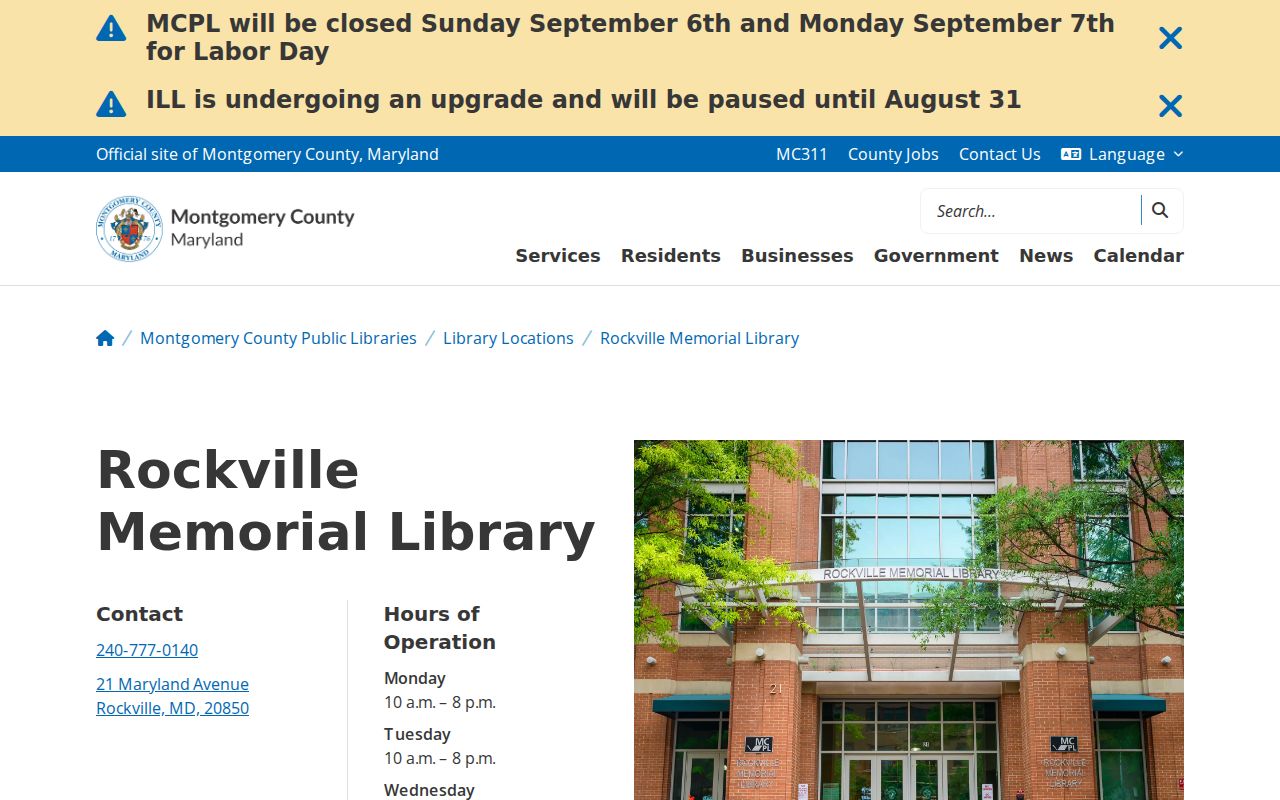
For many Aspen Hill-era searches, the Silver Spring collection is the closest organized run. It spans Washington Suburban titles from 1912 through 1931. It also includes Silver Spring city volumes from 1954 through 1973, and community phone books from 1995 forward. A missing Aspen Hill name may simply sit under Silver Spring. Publishers organized by service territory, postal delivery, or telephone exchange, not by today's boundaries. Montgomery County Public Libraries make a practical first stop. They offer branch reference help and local-history referrals. Aspen Hill Library anchors public research in the community. Rockville Memorial Library is the larger branch for genealogy assistance and collection guidance. Ask for a title and year first. Staff cannot confirm that a person lived at an address. The Montgomery County Public Libraries source gives a clear view of the library network. Check it before any request for a particular run.
A branch referral narrows the right collection. The publication itself remains the evidence to cite for any historical listing.
Aspen Hill Directory Titles
The Maryland State Archives directory series widens a search past a single postal label. It covers Polk's Maryland, Delaware, and District of Columbia volumes for 1906-1907, Maryland State Gazetteer volumes for 1909-1917, a 1967 Rockville volume, and a 1968 Kensington, Takoma Park, and Wheaton directory. A book that followed a nearby town or exchange can still catch an Aspen Hill-area listing. Maryland State Archives also publishes county-level series for land, estates, census, marriage, voter, and court research. Its Montgomery guide maps the series rather than searching every name at once. Identify the series number, year, and name variant before ordering copies or planning Search Room work. The archive circulates nothing, and image availability varies by series. Note: A nearby-town title is a search path, not proof that all Aspen Hill addresses were printed under that town.
Reading Aspen Hill Directory Entries
Read the title page and abbreviation key first. Only then should a directory line count as evidence. The Library of Congress sample, Solomon J r 9000 Colesville pike Silver Spg Md Shepherd3331, shows a residence marker, the printed street and postal city, and a local telephone exchange. It models good transcription, not an Aspen Hill-specific finding. Other volumes add initials, spouse names in parentheses, occupation, employer, owner or renter notations, widow notations, and business categories.
| Printed name | Use the initials and spelling exactly as published. Do not expand an initial by guesswork. |
|---|---|
| Residence marker | In the LOC example, r marks a residence listing rather than a current verification. |
| Street and postal city | Copy both because Aspen Hill-area volumes can use a neighboring postal label. |
| Telephone exchange | Keep the exchange and number as printed, with the directory year. |
| Variable details | Occupation, spouse, owner or renter marks, and widow notation appear only when that run includes them. |
- Criss-cross directory
- A reverse directory arranged by street and number, used to find a printed occupant from a dated address.
- Householder index
- An index organized around the named household or address convention chosen by the publisher.
- Abbreviation key
- The volume's explanation of marks and shortened words. Photograph or transcribe it before interpreting entries.
Rockville Memorial Library is the county branch to check for local-history and genealogy referrals before requesting any specific directory run.
Directory notation grows reliable when the page image, year, title, and abbreviation key stay together.
Aspen Hill Directory Evidence Levels
A historical directory entry is a lead, not proof. It pairs a name with an address at one date, and nothing more. A parcel question goes down one path. Fix the address from the dated listing, then check the current account through SDAT and pull the recorded instrument through MDLandRec. A family-history question goes down another. Test the name against a census, newspaper, probate, vital, or archive record from the same period.
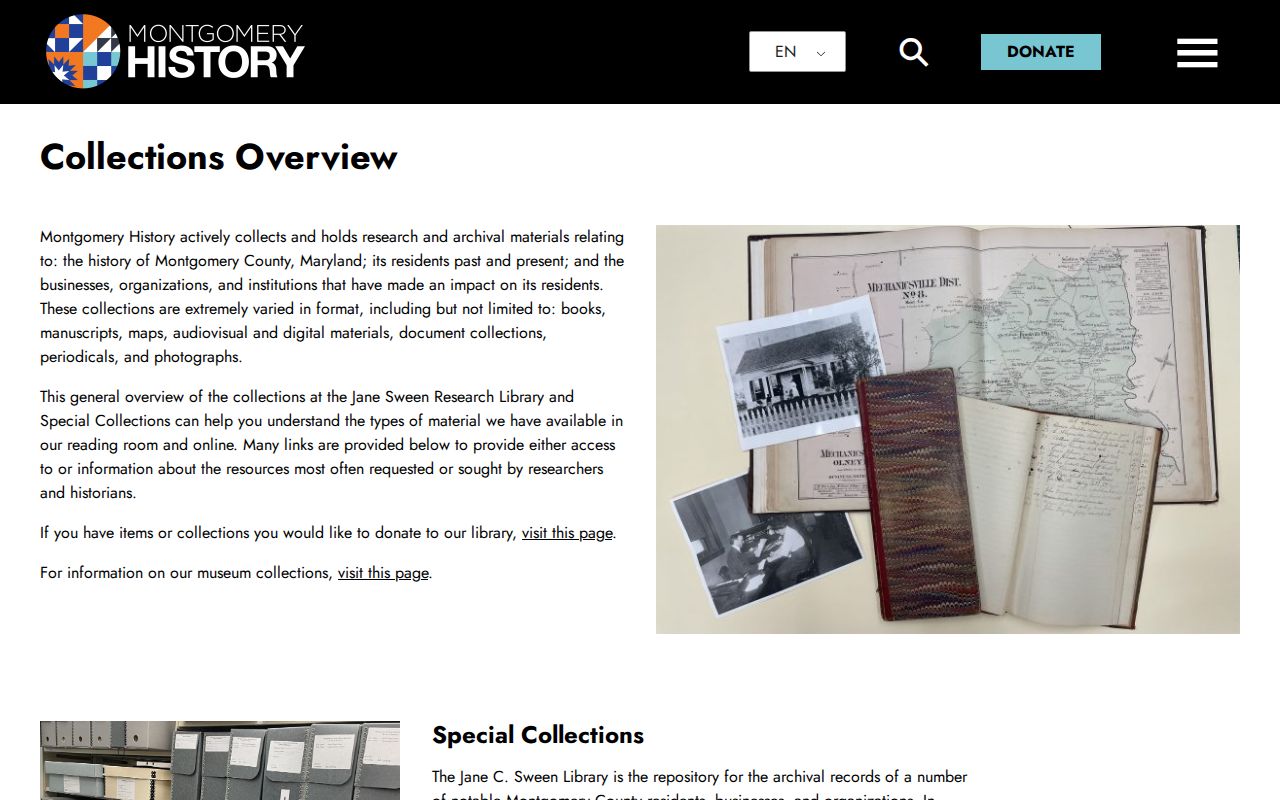
Montgomery History can widen the trail. Its holdings span genealogy material, county records, wills, marriages, land and tax records, censuses, fire-insurance records, newspapers, cemetery cards, interment books, and vertical files. The collections overview serves as a source map for all of it. Even so, a repeated address stays a lead. Streets get renumbered. Initials shift, and households move between annual editions.
Trace Aspen Hill Directory Households
Let a directory sequence build a dated trail, not one answer. Start with the earliest likely volume. Search surname variants, initials, and nearby postal labels too. When a listing appears, build a small timeline. Include the directory year, printed address, notation, and source page. Then follow that same spelling forward and backward wherever nearby volumes survive.
- Locate the earliest plausible name or address in a nearby directory or telephone volume and preserve the full citation.
- Check the next available directory years for the same name, spelling variants, street, and postal label.
- Use a criss-cross section when the volume has one, then compare the dated address with a county parcel lead.
- Pair the directory timeline with census years, newspapers, deeds, probate, or vital records that fit the date.
- Label each finding as a printed listing, index result, image, or certified record rather than merging their weight.
A disappearance can mean many things. It may reflect a move, a death, an unlisted number, a changed publisher practice, or a new postal label. Check the newspaper and archive trail before picking one cause. Once the historical address is pinned down, modern street-level records belong on the Aspen Hill street directory path.
Aspen Hill Directory Access Changes
Montgomery History's Jane C. Sween Research Library is in transition. Research services were suspended from September 1, 2025. Reopening is expected in 2027. Limited remote requests still run. The stated terms allow up to five free images, $2 for each additional image, $10 high-resolution images, a $25 digitization minimum, and research charges starting at $50 for the first hour. Confirm the current terms first. Send no material or payment before you do.
The Montgomery History collections page shows how much historical material stands behind a directory search.
During the move, the trail stays open. MCPL and the Maryland State Archives both work as parallel access routes. Montgomery History's remote service can still answer a focused item request. Whichever route you choose, the historical volumes remain reachable.
Note: Verify collection availability and request terms on the custodian's current page. Confirm everything before traveling or paying for research.
Aspen Hill Directory Timeline
Aspen Hill's geography kept shifting under its directories. The name began with a mid-1860s post office. A general store stood nearby on the old Washington-Brookeville Pike. Around 1950 the area was still largely undeveloped. Postwar growth, late-1950s commercial nodes, and garden apartments from the late 1960s through the mid-1970s later reshaped the street and postal landscape. Earlier material may name a tract, crossroads, farm, or nearby town instead.
| 1906-1917 | Maryland, Delaware, District of Columbia, and gazetteer titles provide early regional leads. |
|---|---|
| 1912-1931 | Washington Suburban and Polk runs offer nearby directory coverage before the postwar build-out. |
| 1933-1964 | Library of Congress telephone-directory runs preserve regional address and exchange evidence. |
| 1954-1973 | Polk's Silver Spring city volumes are a key nearby shelf for suburban-era searches. |
| 1995 forward | Silver Spring community phone books offer later dated leads, subject to collection conditions. |
That is why a search can move across titles. The records themselves are not interchangeable. Keep each printed label with its date, then let an independent county or archive source test the connection.